
MACALLÚ FIELD GUIDE 04
ABOVE THE TREES
A few birds to listen for while the woods forget you are there
If you come to one of the shelters along the walk, sit down for a while before you move on. You do not have to turn it into a birdwatching exercise and you do not need to know anything about birds.
Give the woods a few minutes to settle around you. When you first arrive, you are the disturbance — footsteps, clothing moving, perhaps a conversation as you sit down. Then things begin again. A bird moves through a branch. Something calls from behind you. Leaves shift where there seemed to be nothing a moment earlier.
Birdwatchers often hear a bird before they see it, and once you start listening the woodland becomes much busier than it first appeared. You may recognise one of the birds below. You may only hear it. You may spend ten minutes looking for it and never find it at all. That is fine too.
WHILE YOU ARE SITTING
Listen first
Do not immediately scan every branch. Listen for one sound and try to work out where it is coming from. Is it high above you, low in the bracken, on a tree trunk or somewhere behind the shelter? Then look.
Some birds repeat the same call. Others seem to tumble through a whole phrase. Some are much louder than their size suggests. After a while you begin to separate one voice from another, even when you still have no idea who is making it.
If you use a bird-identification app such as Merlin, let the phone listen with you. Please do not play recorded bird calls aloud to make wild birds respond. Calls and songs are used for territory, warning and courtship, particularly during the breeding season, and the point here is to observe what the woods are already doing rather than interrupt it.
EIGHT VOICES TO BEGIN WITH
You do not need to find all of them
These are simply useful birds to know because each gives you something easy to remember — a colour, a movement, a call or a peculiar habit. Once you recognise even two or three, sitting quietly in the woods becomes a different experience.

Robin
Look for: the orange-red face and breast, often on a low branch or somewhere surprisingly close to you.
You probably already know this one by sight, which makes it a useful bird to begin with. A robin may sit quite still while you are trying to find the smaller birds moving through the branches, and its call is often easier to learn than a complicated song.
Listen for the repeated metallic ticking call. BirdWatch Ireland describes it as sounding rather like an old clock being wound up. Once you know it, you begin hearing robins before you see them.

Wren
Look for: a very small brown bird with a short tail usually held upright. Do not be fooled by its size.
The wren is one of those birds that can make a beginner wonder where the noise is coming from. It spends much of its time low in vegetation and can be difficult to see, but its song is remarkably loud for such a small body.
In winter wrens sometimes roost communally for warmth. BirdWatch Ireland notes that as many as 50 have been recorded using a single nestbox. Imagine trying to fit fifty of these tiny birds into one sleeping place.

Blackbird
Look for: a male is black with a yellow-orange bill; the female is brown. Watch the ground as well as the branches.
If you are new to birds, the blackbird is a good one to learn by ear because its song is slower and more spacious than many of the little woodland birds. It is mellow and flute-like, and the phrases keep changing rather than repeating in the same way again and again.
You may hear the song from quite high in a tree, then find the same bird later running across the ground looking for worms. It is worth looking down occasionally; birdwatching is not actually all above the trees.

Chaffinch
Look for: white wing patches. The male also has a blue-grey crown and a warm pinkish-orange breast.
Chaffinches are common enough that you may stop paying attention to them once you recognise one, but take a moment to look properly. They are beautifully coloured, particularly the males, and their descending song often finishes with a little flourish.
Their nests are made with moss and dried grass and can be camouflaged with lichens and cobwebs. After reading Colour in the Landscape, you may find yourself noticing the materials in a bird's nest differently too.

Goldcrest
Look for: a tiny olive-green bird moving constantly through branches, with a yellow crown stripe that may be surprisingly difficult to see.
This is one where you may spend several minutes looking at exactly the right tree and still fail to see the bird that is making the sound. Goldcrests move quickly, often stay high or partly hidden in foliage, and their calls are extremely high-pitched.
At around 9 cm long, the Goldcrest is Ireland's smallest breeding bird. Some people also find its very high call difficult to hear, so two people sitting in the same shelter may genuinely not be hearing the same thing.

Treecreeper
Look for: a small mottled brown-and-white bird pressed against the trunk, with a slender curved bill.
With a treecreeper, watch the movement rather than trying to memorise every feather. It searches the bark as it works its way up a trunk, using the curved bill to pick out insects and other tiny invertebrates.
When it reaches the upper part of a tree, it typically flies down to the base of another and begins climbing again. BirdWatch Ireland specifically names Killarney National Park as a good place to look for them.
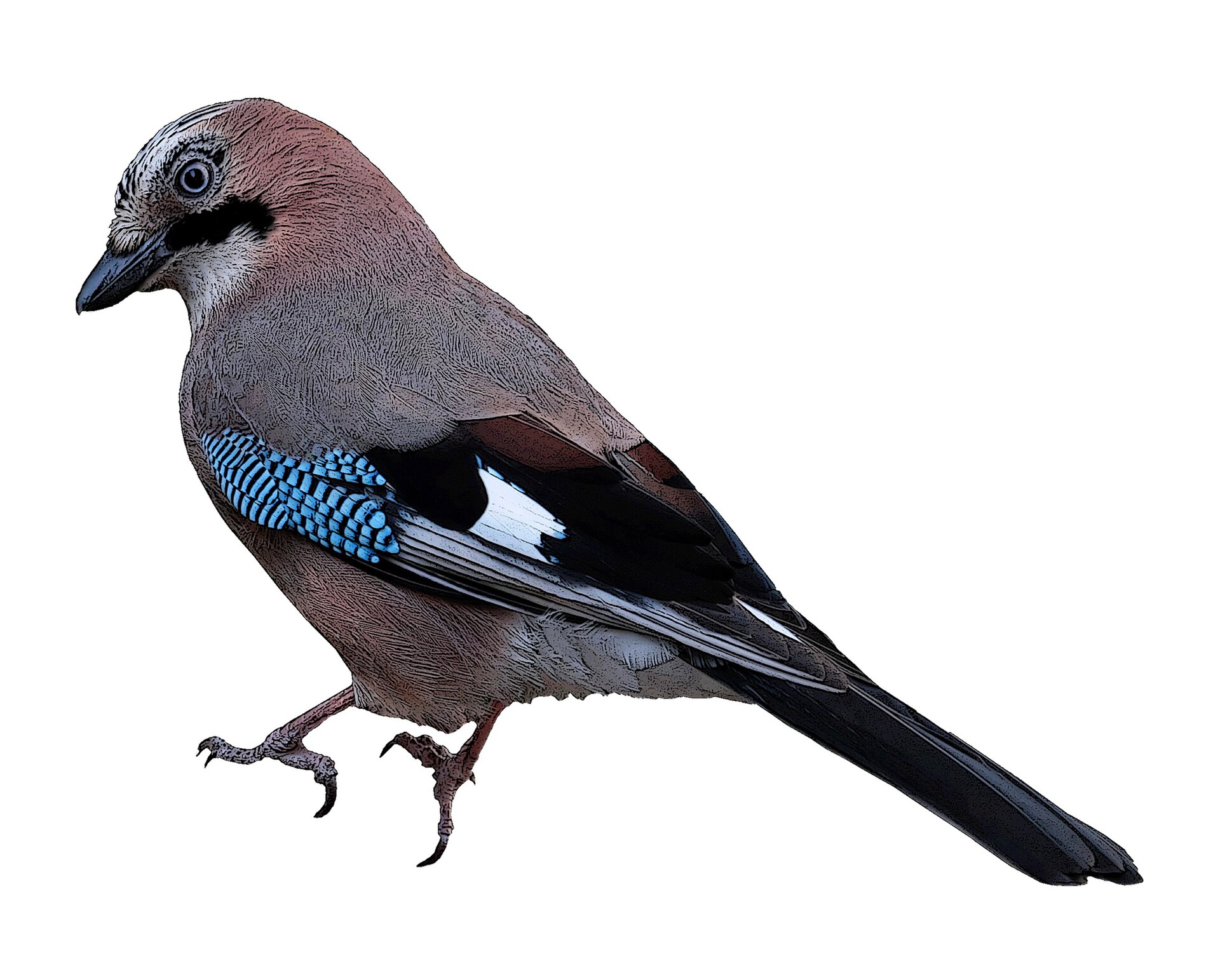
Jay
Look for: a fairly large pinkish-brown bird with a brilliant blue patch on the wing. You may hear its harsh call before it appears.
The jay is a member of the crow family, although its colouring makes that relationship rather easy to forget. In Irish woodland it can also be shy, so a brief flash of blue moving between trees may be all you get.
In autumn jays hide large numbers of acorns and other nuts for winter and can remember the locations of their caches with remarkable accuracy. The forgotten ones can germinate, so a bird gathering food can also help move oak trees through a landscape.

Great Spotted Woodpecker
Look for: a black-and-white bird with red beneath the tail. In early spring, listen for a short burst of drumming against wood.
For Killarney this is more than another bird to identify. Great Spotted Woodpeckers disappeared from Ireland after historic deforestation and only began recolonising the country in the twenty-first century.
The first recorded sighting in Killarney National Park was in Tomies Wood in 2013. In 2024 the Park confirmed its first successful breeding pair. So if you hear that drumming here, you are listening to a bird that was absent from the Irish landscape for centuries and has found its way back.
A SMALL KILLARNEY ECHO
A sound that had disappeared
The Great Spotted Woodpecker is a particularly good bird to end with because its return says something about the landscape itself. NPWS records that woodpeckers appear to have disappeared from Ireland following deforestation in the seventeenth and eighteenth centuries. Centuries later they recolonised the country, and Killarney's mature oak woods have now given them somewhere to breed again.
There are echoes that come from the past because a story survived. This one came back on wings.
BEFORE YOU MOVE ON
Stay for another minute
Put the guide away for a moment and listen without trying to name anything.
How many different voices are there?
Choose one of them. Listen again and see if you can work out where the bird is. If you find it, good. If you do not, you have still heard something that was there before you arrived and will probably continue after you leave.
Sometimes being still is enough.